

Henri Maillardet
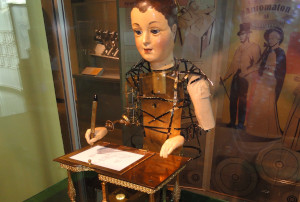
Around 1800, the Swiss mechanician and clockmaker Henri Maillardet (1745-1830), who worked then in London, created an extraordinary automaton, known today as the “Draughtsman-Writer”. Maillardet’s machine had the largest “memory” (cam-based) of any such machine ever constructed, enough to create four drawings and three poems (two in French and one..Read More
Joseph-Marie Jacquard
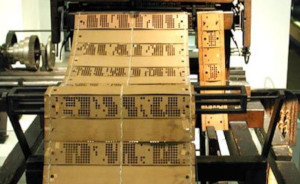
Joseph-Marie Jacquard was not the inventor of the programmable loom, as it is generally acknowledged, in fact, he created an attachment to the loom, which played a significant role not only in the textile industry but also in the development of other programmable machines, such as computers, for example, the..Read More
Johann Mälzel
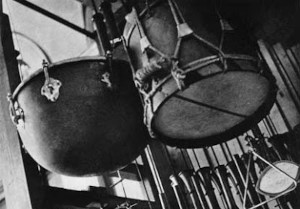
Johann Nepomuk Mälzel (Maelzel) (1772–1838) was a German inventor, engineer, and showman, best known for manufacturing a metronome and several music-playing automata and displaying a fraudulent chess machine, the famous Turk of Wolfgang von Kempelen. äelzel was born in Regensburg, a town in eastern Bavaria. The son of an organ..Read More
Abraham Jakub Stern
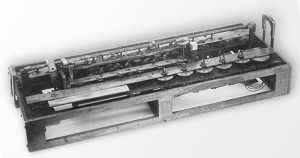
Around 1810, the Galician Jew Abraham Jakub Stern (1768-1842), a remarkable mathematician, inventor, translator, and censor, designed his first computing machine. In 1811 he sent a report to his patron Stanisław Staszic (1755-1826), outlining the device and asking for financial help, and the device was first presented to the public..Read More
Differential Engine of Charles Babbage
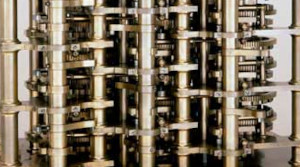
A numerical table is a tool designed to save the time and labor of those engaged in computing work. The oldest tables which are preserved were compiled in Babylon in the period 1800-1500 B.C. They were intended to be used for the transformation of units, for multiplication and division, and..Read More
Thomas de Colmar
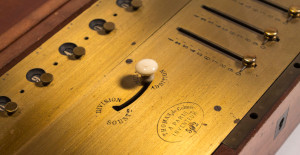
The first calculating machine put in serial production was the Arithmomètre (arithmometer) of the French entrepreneur Charles-Xavier Thomas de Colmar (1785-1870). Colmar conceived the idea of the arithmometer during his lengthy stay with the armies of Marchall Soult, where he needed to perform a lot of calculations. This became even..Read More
James White

In 1822, James White, an English civil engineer, and prolific inventor published a fascinating 394-page book with the long name A New Century of Inventions: Being Designs and Descriptions of One Hundred Machines, Relating to Arts, Manufactures, and Domestic Life. Remarkably, among the 100 machines, described by White, there is..Read More