

John Backus
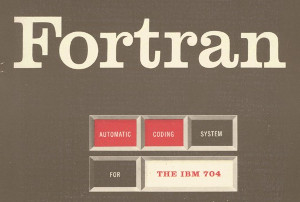
John Warner Backus (1924-2007), a bachelor of mathematics from Columbia University, saw his first computer in 1950, when he was hired as a programmer in the IBM Computer Center on Madison Avenue, to take care of the Selective Sequence Electronic Calculator (SSEC), an electromechanical computer (a hybrid of some 13000..Read More
Gordon Pask
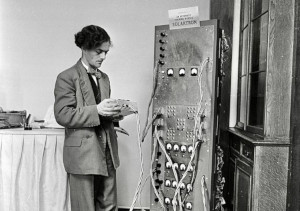
At the beginning of 1956, two young Cambridge scientists, the psychologist Gordon Pask (1928-1996) and physicist Robin McKinnon-Wood (1931-1995), created a hybrid teaching and learning analog computer, in response to a request by the Solartron Electronic Group for a machine to exhibit at the Physical Society Exhibition in London. ordon..Read More
Russell Kirsch (scanner)
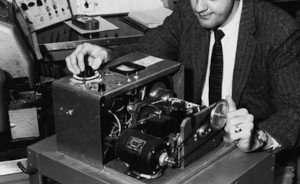
In the world of computers, the scanner is a device that optically scans images, printed or written text, a three-dimensional object, etc. representing it in a digital format. The now ubiquitous device can be found in offices as a desktop (or flatbed) scanner, where the document is placed on a..Read More
John McCarthy
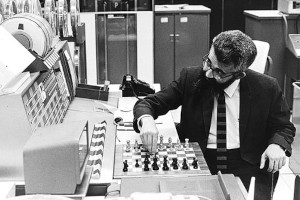
John McCarthy (1927-2011) is a legendary person in the fields of computer science and AI (artificial intelligence). Primarily known as the creator of one of the longest-lived computer languages in use—LISP (in 1958), McCarthy was one of the first people, to be interested in AI (since 1948) and coined the..Read More
William Higinbotham
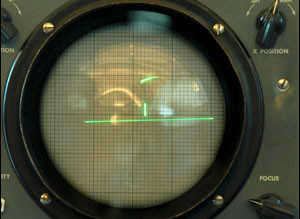
The American physicist and a leader in the nonproliferation movement William (Willy) Alfred Higinbotham (1910—1994) is credited with creating the first computer video game to display motion and allow interactive control with hand-held controllers in the middle of 1958. illiam Higinbotham earned an undergraduate degree from Williams College in 1932..Read More
Ben Gurley (PDP-1)
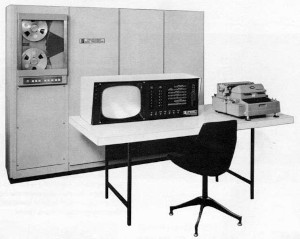
In 1959, a small and relatively new company (founded in 1957) for logic modules and other laboratory equipment, located in an old woolen mill in Maynard Massachusetts, named Digital Equipment Corporation (DEC), decided to build a computer. Ken Olsen, a cofounder of DEC, remembered: We had a dream of interactive..Read More