

Emory Ensign
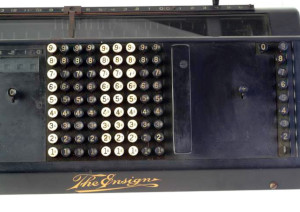
Ensign Electric Calculating Machine is a highly developed, electrically driven adding and subtracting machine, particularly suited for multiplication (by repeated addition) and semi-automatic division (subtraction and division are done by complementary addition). It was devised and patented by the young engineer from Illinois Emory Seymour Ensign (1878-1944), at the beginning..Read More
John Ambrose Fleming

In the first half of the 20th century, vacuum tubes allowed the development of radio broadcasting, long-distance telephone service, television, and the first electronic digital computers, which were the largest vacuum-tube systems ever built. So, who and when invented the vacuum tube? Let’s meet the English scientist John Ambrose Fleming...Read More
Christel Hamann
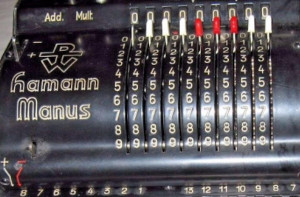
The German engineer Christel Hamann (1870-1948) is an outstanding figure in the world of mechanical calculators. He is a holder of numerous patents (in the USA, Canada, Germany, Sweden, Switzerland, and Great Britain) in this area and the constructor of countless mechanisms and calculators, let’s mention only Gauss, Berolina, Mercedes..Read More
Adix of Josef Pallweber and Adolf Bordt
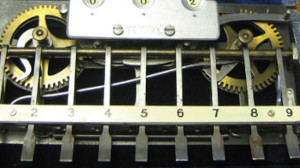
On 1 October 1903, the company Adix Company Pallweber & Bordt of Mannheim, Germany, was entered into the commercial register, for the production of calculating machines. The sole shareholders were Josef Pallweber (1858-1921), a famous Austrian/German engineer, equipment manufacturer, and inventor, and Adolf Bordt (1875-1940), an owner of a business..Read More
Alois Salcher
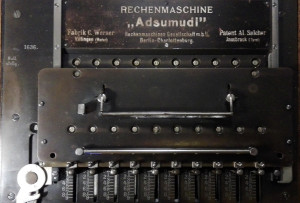
At the beginning of the 20th century, the Austrian engineer and businessman from Innsbruck Alois Salcher devised and produced a fascinating calculating machine. Despite its original construction, the machine of Salcher was never much of a success, and it is rare today. The known serial numbers indicate a production run..Read More
Abraham Gancher
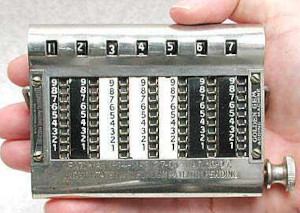
The Golden Gem adding machine enjoyed a long sales success through the first half of the 20th century. It was based on the Arithmachine of Heinrich Goldmann (a.k.a as Henry Goldman) from the late 1890s, and on the efforts of three inventors—Abraham Gancher (a Russian Jew and emigrant to the..Read More
Lee De Forest
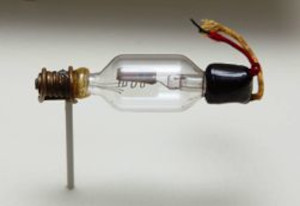
Lee De Forest (1873–1961) was a remarkable American inventor with over 180 patents to his credit. He took credit for the Audion, the first vacuum triode, a vacuum tube that takes relatively weak electrical signals and amplifies them. De Forest is one of the fathers of the electronic age, as his Audion helped to..Read More
William Cordingley
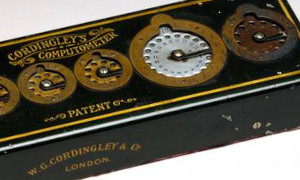
In the beginning of the 20th century, the Englishman William George Cordingley, a merchant, and author of several books for commerce, stock exchange, and business tables and calculations from the end of the 19th and beginning of the 20th centuries, devised a simple adding machine, which he patented in 1907..Read More
Roberto Piscicelli
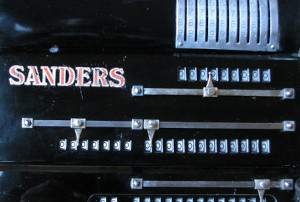
The Italian civil engineer from Naples Count Roberto Piscicelli (1863-1926) was a prolific inventor with 34 patents to his name, which he received in Italy, Great Britain, Denmark, France, Austria, Germany, Spain, Switzerland, and the USA in the beginning of 20th century for railway-ticketing machines (machine for printing and issuing..Read More