

Nels Ockerlund
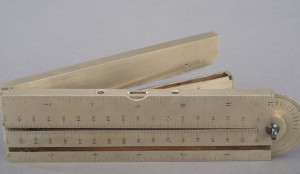
In 1870 Nels Ockerlund (1837–1903), a Swedish immigrant (he immigrated to the United States in 1865 and settled in New York City, and became a citizen in 1879), patented two calculating devices—an improved rule and calculator (U.S. Patent 102034 issued 19 April 1870), and improved adding-machine (U.S. Patent 105717 issued..Read More
Emile Baudot
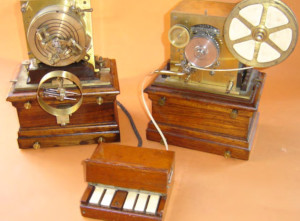
The first widely adopted device to encode letters, numbers, and symbols as uniform-length binary sequences was the multiplexed printing telegraph, created in the early 1870s by the French inventor Jean-Maurice-Émile Baudot. The Baudot’s telegraph revolutionized communications and made his name synonymous with rapid telegraphy. The baud unit of transmission speed..Read More
Axel Petersson
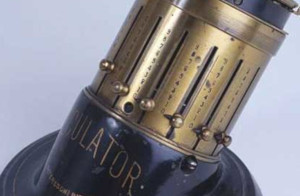
The Swedish-Norwegian engineer Axel Jacob Petersson (1834-1884), was a universal inventor and is famous for several books and articles, and the construction of railways and viaducts, including the famous railway bridge Järnvägsbron i Minnesund, steam engines, a rotating camera for photography, military equipment like a bayonet and a repeating rifle,..Read More
Frederick Warren
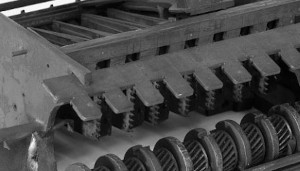
In early 1875, as he lay seriously ill in his brother Edward’s home, Frederick “Fred” Warren oversaw the assembly of a calculating device, which he called “a machine that will astonish the world”. The so-called Warren Calculating Engine performed as its creator predicted it would, but his untimely death kept..Read More
George Grant
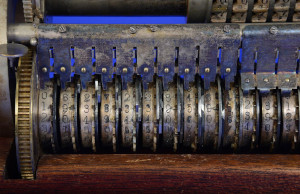
The American engineer and entrepreneur George Barnard Grant (1849-1917) is a notable figure in the world of the mechanical calculator. He was the creator of several all-purpose calculators, but also of a magnificent Difference Engine. As a whole, Grant devised four different calculating machines: three all-purpose calculators, and a sophisticated..Read More