

John Kemeny and Thomas Kurtz
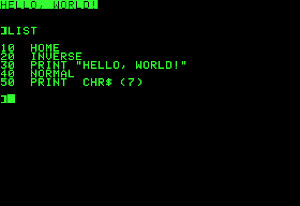
In 1962, John George Kemeny (a Jewish-Hungarian American mathematician, computer scientist, and educator, born as János György Kemény) (1926–1992), chairman of the Dartmouth College Mathematics Department, and his colleague Thomas Eugene Kurtz (b. 1928) submitted a grant to NSF, for the development of a new time-sharing system, with the aim..Read More
Eric Arthur Johnson – touch screen
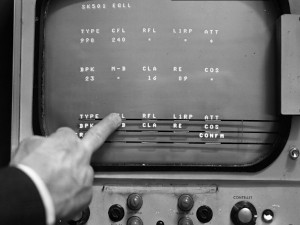
The concept of the finger-driven touchscreen interface was put into words in 1965, by the British engineer Eric Arthur Johnson. He worked at the Royal Radar Establishment in Malvern, England, and was interested in developing a touchscreen for air traffic control, as the UK National Air Defense was in need..Read More
James Russell (compact disk)
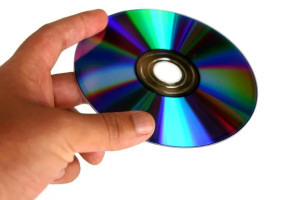
The first workable digital compact disc device, the precursor to now ubiquitous CD/DVDs, was invented in the late 1960s by the American physicist James Russell, who was quite frustrated with the wear and tear of his vinyl records and their poor sound quality and tried to improve the record player...Read More
Irving Becker
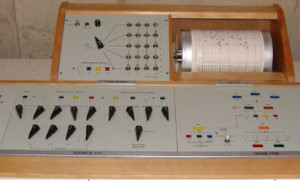
The Computer Trainer Model 650 (named also CT-650), was developed at the beginning of 1967 by a man named Irving Becker (1917-2005), whose company produced a number of radios. CT-650 is considered to be one of the earliest digital personal computers, although it was not a personal computer, as we..Read More
Thomas Osborne (personal computer)
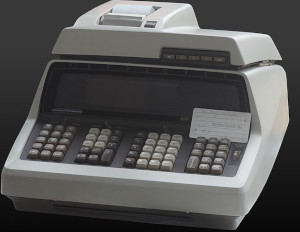
The funny thing is that the first “personal computer” in the world was (in fact) a calculator. It seems the earliest documented use of the term personal computer was in the 4 October 1968, issue of Science (Science is the academic journal of the American Association for the Advancement of..Read More